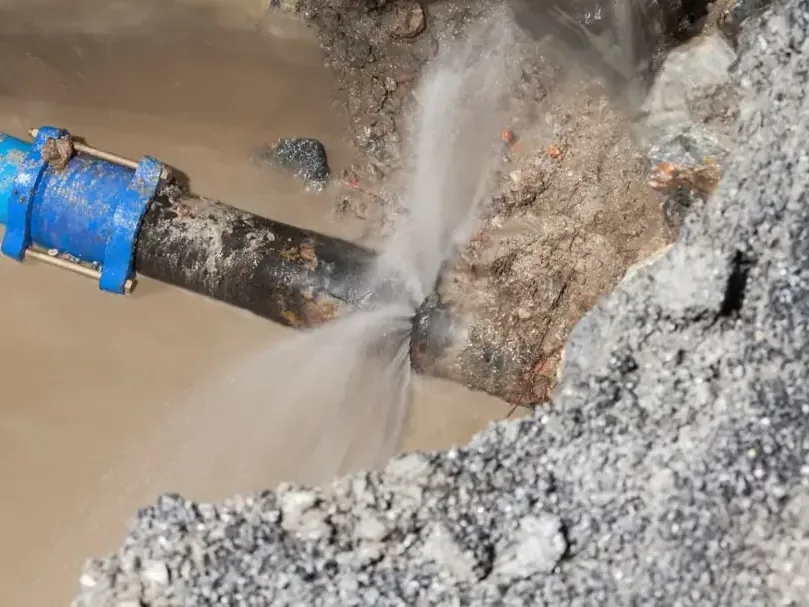
In Westlake Village, Las Virgenes Municipal Water District owns and operates the water system, but the homeowner is responsible for the water service pipe from the house side of the water meter up to the house. A leak on that stretch is the owner's to find, fix and clean up.
Key takeaways
- Las Virgenes Municipal Water District owns and operates the water system and sets all rates and policies for the city.
- The homeowner is responsible for the water service pipe from the house side of the meter up to the house.
- Typical signs are a wet strip in the yard, a meter that keeps moving with everything off, lower pressure and a jump in the water bill.
- District service staff are on call 24 hours a day for water and sewer emergencies.
- When a service pipe leak ends up inside the house, the water is extracted and the walls and floors are measured and dried.
Who owns what between the street and the house
Las Virgenes Municipal Water District owns and operates the water system for the city and sets all rates and policies. The meter marks the handoff between the district's system and the owner's.
The homeowner is responsible for the water service pipe from the house side of the meter up to the house. That makes the pipe a private repair, even though it carries the district's water.
When it is unclear which side of the meter a leak is on, a call to the district is the place to start, since its service staff are on call 24 hours a day for water and sewer emergencies.
- District side: the water system up to the meter, along with rates and policies.
- Owner side: the water service pipe from the house side of the meter up to the house.
- Inside the house: every valve, pipe and fixture belongs to the owner.
Signs of a leak on the owner's side of the meter
A service pipe leak stays underground until it surfaces, so the clues are usually indirect.
- A strip of soggy or unusually green ground between the meter and the house, even in dry weather.
- A meter dial that keeps turning when every fixture and appliance is off.
- Lower water pressure at taps and hose bibs than usual.
- The sound of running water near an exterior wall or the main valve.
- A water bill that jumps with no change in household use.
- A damp baseboard, a musty smell or a stain on an exterior wall near where the pipe enters.
First steps when a service pipe leak is suspected
The goal is to learn which side of the house valve the leak is on and to limit the water that gets inside. The meter itself belongs to the district's system, so it is read and left alone.
- Check the meter with every fixture and appliance off. A moving dial points to a leak somewhere past the meter.
- Close the main shutoff valve at the house and look at the dial again.
- If the dial keeps moving with the house valve closed, the leak is on the pipe between the meter and the house, which is the owner's responsibility.
- Photograph wet ground, walls and floors with the date visible.
- Call a plumber for the repair, and call the district if the leak may be on its side of the meter.
- Call a restoration team if water has entered the house.
When the leak ends up inside the house
Not every service pipe leak stays outdoors. Where the pipe meets the house, water can follow it into wall bases and under floors.
Entry points and wall bases
The first sign indoors is often a damp baseboard or a musty smell near an exterior wall. Drywall wicks water upward from the bottom edge, so a wall that looks fine at eye level can be wet low down.
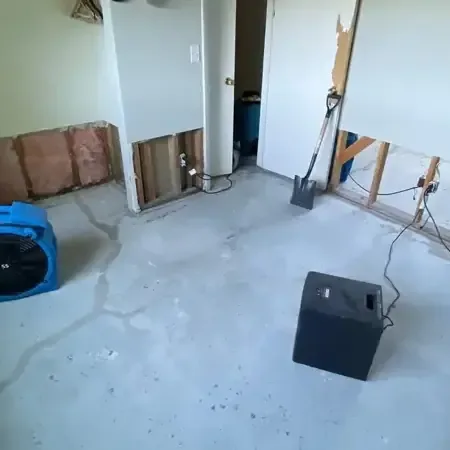
The drying team measures the wall base with a moisture meter and opens it where readings stay high.
Flooring and cabinets
Wet carpet pad, laminate and wood flooring are measured and either dried in place or lifted. Cabinet bases are checked and the toe kicks removed so air can reach the back of the cabinet.
The water extraction crew pulls any standing water first, before drying equipment goes in.
Homes built from 1960 to 1989 and decades of use
Most homes in the city date from three decades. The largest share, 32.3 percent of housing units, was built from 1960 to 1969, followed by 26.9 percent from 1970 to 1979 and 20.0 percent from 1980 to 1989.
Water service pipes in homes of that age have had decades of use, whatever they are made of. An owner who finds one leak may reasonably ask the plumber for an opinion on the condition of the rest of the run.
A leak that runs for a long time before anyone notices can soak more of the structure, which makes the early signs worth acting on.
Drying and cleanup after a service pipe leak
The plumber fixes the pipe. The restoration team deals with the water that got in, and the two jobs can run at the same time once the valve is closed.
Moisture left in walls can support mold growth in 24 to 48 hours, so extraction and drying start as soon as the water is under control. The burst and pinhole pipe leak cleanup steps cover the sequence in detail, and the broader burst pipe water damage process shows what to expect from start to finish.
Records help. Photos of the wet ground, the damaged materials and the meter before and after the valve was closed show when the leak began and when it stopped.
The restoration team's moisture logs add the drying side of the story.
- Standing water is extracted from floors and low areas.
- Wet baseboards, pad and soaked drywall bases are removed if they cannot be dried.
- Fans and dehumidifiers run until readings match dry reference areas.
- Each visit is documented so the owner can see when the structure is dry.
Questions
Who is responsible for the water service pipe in Westlake Village?
The homeowner is responsible for the water service pipe from the house side of the water meter up to the house. The district owns and operates the water system on its side of the meter.
How can a homeowner tell the leak is past the meter?
If the meter dial keeps moving after the main valve at the house is closed, the leak is on the pipe between the meter and the valve, which is the owner's side.
Should the homeowner touch the water meter?
No. The meter belongs to the district's system. Reading it is fine, but shutting off and adjusting is done at the house valve, and the district handles anything on its own side.
What if water has already reached the baseboards?
Close the house valve, photograph the damage and call a restoration team. Wall bases and flooring are measured, and anything that cannot dry in place is removed.
Does the district respond to water emergencies at night?
District service staff are on call 24 hours a day for water and sewer emergencies, so a call about a suspected leak on the district side is possible at any hour.