Water Extraction and Removal in Westlake Village, CA
Standing water in carpet, pad and subfloor keeps soaking upward and outward, so in Westlake Village the extraction crew pulls it out first and then measures what is left in the materials.
(888) 578-6508Send extraction to my floors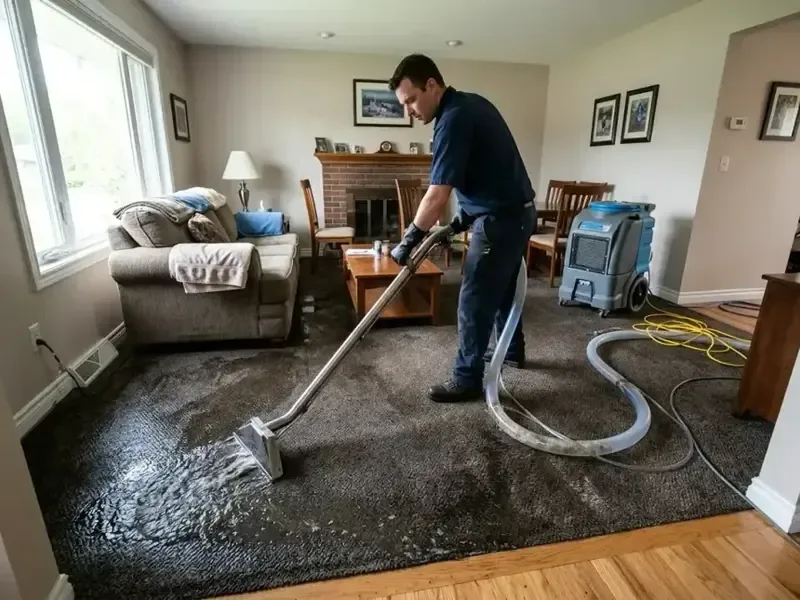
What every water extraction and removal job includes
Rapid local response
Dispatch runs 24/7, and active water is treated as urgent at any hour, weekends and holidays included.
IICRC S500 drying standard
Moisture meters and thermal imaging set the plan, and drying stops on readings, not on a calendar.
Claim-ready documentation
Moisture maps, daily psychrometric logs and timestamped photos taken before anything is torn out.
West Valley water know-how
Slab leaks under ranch homes, hard-water heater failures, attic AC leaks and winter storm runoff.
First steps for water extraction and removal
- Stay out of it. Keep clear of standing water near outlets and cords, and switch off breakers for rooms with wet outlets.
- Stop more water. Close the valve if a pipe or hose is the source, and use towels or sandbags to keep storm water out.
- Lift valuables. Raise electronics, papers and small furniture off the wet floor, and pull up area rugs only if they are not sewage soaked.
- Photograph the depth. Photos and notes on how deep and far the water spread give the adjuster a starting point.
What does water extraction and removal cost in Westlake Village, CA?
Extraction runs from about $400 for a small clean water spill to $12,000 or more when a whole floor floods or sewage is involved, with the range driven by area, depth and water category.
Single room
- Clean water in one room
- Pump-out and fan drying
- Carpet frequently saved
Several rooms
- A hallway or a few rooms
- Mapping before drying
- Pad replaced where needed
Whole floor or sewage
- Most of the house wet
- Removal of soaked materials
- Containment for Category 3
Ranges are typical, not a quote: the category of water, square footage, material class and how fast drying started move the number most. Run the water damage cost calculator for a closer range.
How water extraction and removal is handled, step by step
Assess the water
Meters and a look at the source show the water category, depth and which rooms were reached.
Extract
Truck-mounted and portable extractors remove the bulk of the water across carpet, stairs and tile.
Pull what cannot dry
Saturated pad, soaked baseboards and contaminated materials come out, and a meter checks the subfloor.
Hand off to drying
Equipment is set for structural drying, and the extraction notes go into the adjuster's file.
Inside a water extraction and removal job
Extraction is the first and most time-sensitive step of any water loss, because every inch of water left on a floor is water the materials will absorb. Water that stays for a day or two stains drywall, swells baseboards and lifts flooring.
Where the standing water comes from
The source decides the water category, and the category decides how the cleanup is run, whether the source is a pipe or a sewage backup.
- Supply pipe, hose or tank failures that release clean water
- Washer, dishwasher or condensate overflows that carry some contamination
- Storm runoff and creek or lake overflow that bring in soil and bacteria
- Sewage backups that need containment before any extraction starts
Ankle-deep or just damp, standing water needs to come out. Tell the extraction crew where it is and how deep.
(888) 578-6508Request standing water removalHow the water is taken out
Truck-mounted units pull large volumes quickly, while portable extractors and weighted wands reach carpet, stairs and tight rooms. Pad is lifted or cut back when it holds too much water to dry in place, and the crew checks the subfloor and wall bottoms with meters before leaving the area. Once the standing water is gone, the job moves to structural drying.
Creek, lake and storm water here
Triunfo Creek, Westlake Lake and the banks of the Las Virgenes Reservoir sit in FEMA flood zones, and the General Plan says those areas have caused property damage in recent history. A National Weather Service flash flood warning named Westlake Village in February 2024, and water that comes indoors during a storm is treated as contaminated until the crew finds otherwise.
Where water extraction and removal help reaches
Extraction crews work across Lakeshore, First Neighborhood and Three Springs, and in the businesses between Lakeview Canyon Road and Lindero Canyon Road, whenever standing water needs to come out.
The same service nearby: water extraction and removal in Winnetka, Agoura Hills, Malibu.
Water damage restoration in Westlake Village · every town covered
Related water damage services in Westlake Village
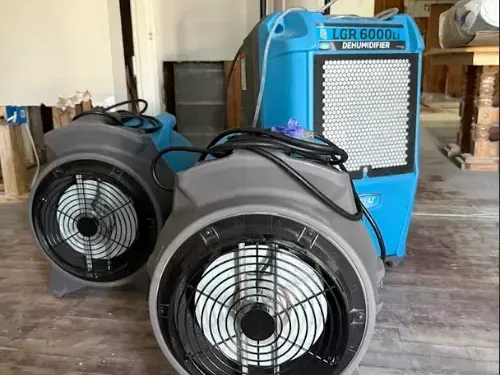 Structural Drying and Dehumidification in Westlake VillageOpen the page
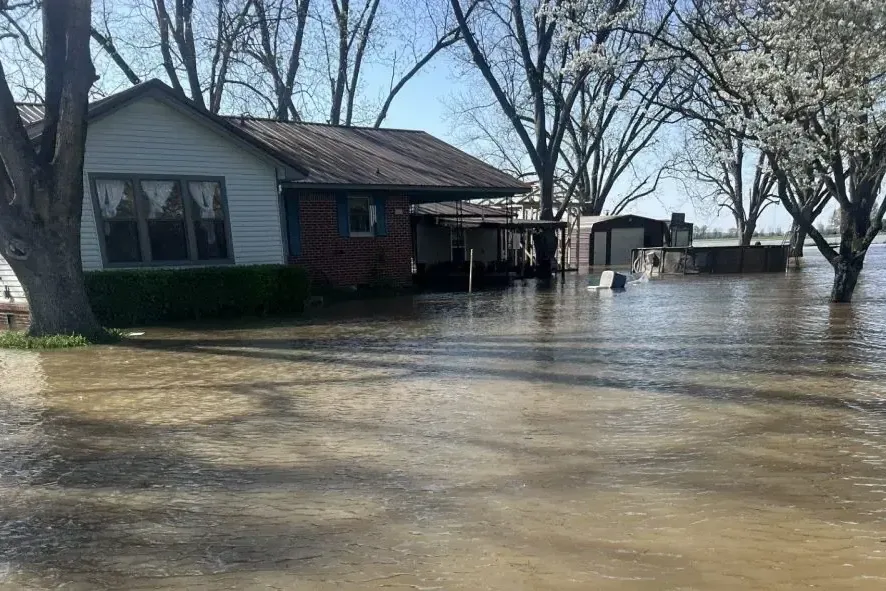 Storm and Flash Flood Cleanup in Westlake VillageOpen the page
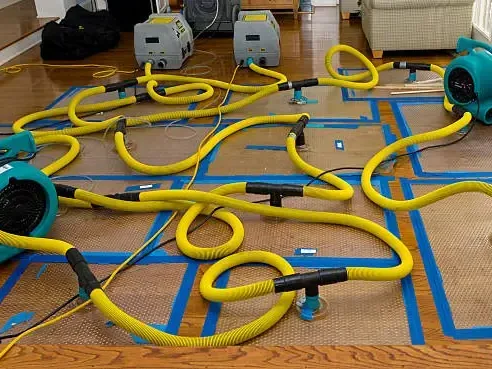 Hardwood Floor Water Damage in Westlake VillageOpen the page
Water Extraction and Removal in WinnetkaOpen the page
Water damage restoration in Westlake VillageOpen the page
Hardwood Floor Water Damage in Westlake VillageOpen the page
Water Extraction and Removal in WinnetkaOpen the page
Water damage restoration in Westlake VillageOpen the page
Water Extraction and Removal questions in Westlake Village, CA
Water still on the floor?
Ankle-deep or just damp, standing water needs to come out. Tell the extraction crew where it is and how deep.
(888) 578-6508 (888) 578-6508Request standing water removalIs the water safe to touch?
Not always. Clean supply water becomes gray within a day or two, and storm or sewage water is contaminated from the start, so gloves and boots are the minimum until the crew confirms the category.
Can wet carpet be saved?
Often, if the water was clean and extraction started early. Padding is usually replaced, while the carpet itself can be lifted, dried and reset when readings stay in range.
Do creek and lake zones matter for cleanup?
Flood zone status matters for flood coverage, but the cleanup depends on the water itself. Any water that enters from the ground or a drain is handled as contaminated, mapped zone or not.
What if water reached the wall?
Wall bottoms are checked with meters after extraction. If drywall or insulation is wet, small inspection holes or cuts let the crew confirm and dry the cavity, which helps prevent hidden damage.
Does extraction come before drying?
Yes. Equipment dries what is left in the materials, so removing standing water first shortens the drying and keeps the readings meaningful.
Water on the floor? Move now
The less water the materials absorb, the less has to be removed, so describe the source and the rooms affected.
(888) 578-6508Clear my floors of water