Drying Time Estimator for Winnetka, CA
Estimate how long a water loss in a Winnetka home takes to dry. The window depends on the class of loss, the water source, the season and how soon drying started.
(888) 578-6508Get readings started nowChoose the closest answer for each question. The estimate shows a typical drying window in days, the way a drying plan is first sketched before readings take over.
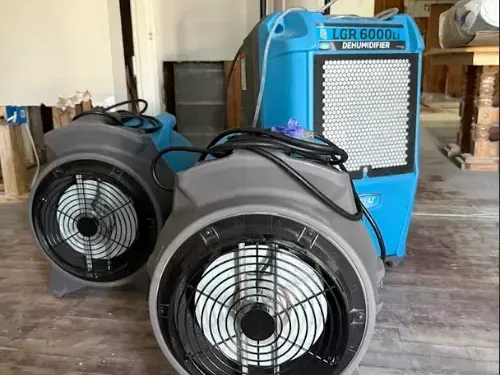
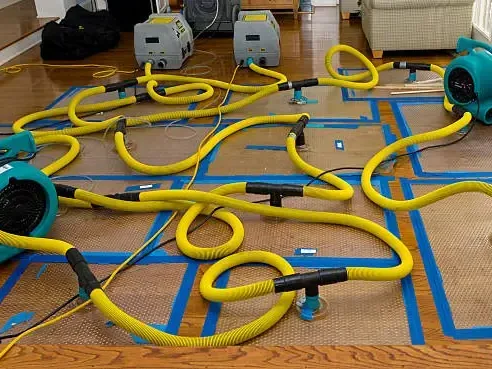
Equipment leaves on readings, not on a schedule: materials must reach 2 to 4 points of a dry reference.
(888) 578-6508Ask about drying times, 24/7Drying time for water damage in Winnetka, CA
Class 1 through 4
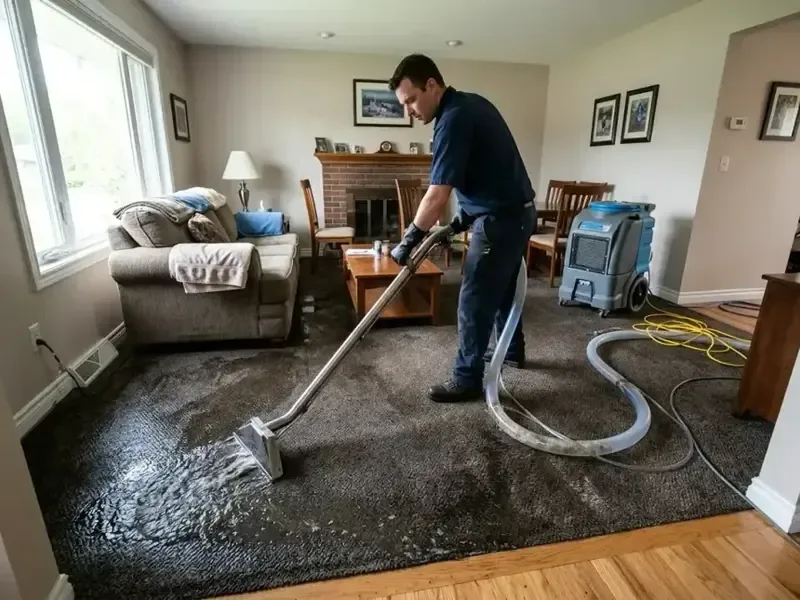
The class of loss describes how much water the materials absorbed. It sets how many air movers and dehumidifiers a room needs and how long they run.
Valley air
Summer air in the Valley is hot and dry, which speeds evaporation, while winter storm weeks bring damp air that slows it. LGR dehumidifiers keep the air inside the drying zone dry either way.
The drying goal
IICRC S500 is the industry drying standard. Wet materials are dried until they read within 2 to 4 points of a dry reference material in the same home.
More on the equipment and readings on the structural drying page.
Services behind these numbers
Drying Time Estimator questions
Numbers are only a starting point
Want readings instead of estimates? The drying team maps moisture 24/7.
(888) 578-6508 (888) 578-6508Get readings started nowWhy can't the equipment come out when the floor feels dry?
Framing, subfloor and drywall hold water after surfaces feel dry. Readings decide, so equipment stays until materials match the dry reference.
Does the hot Valley summer speed drying up?
Dry heat helps evaporation, but closed-up rooms still trap moisture. Air movers and LGR dehumidifiers run until the readings say dry, whatever the season.
Why does a concrete slab take longer?
Concrete is dense and releases water slowly. After a slab leak it often needs desiccant or LGR dehumidifiers and more days than drywall or carpet.
Does a delay change the drying time?
Yes. Water that sits soaks deeper, and contaminated water adds removal and cleaning before drying even starts.
Is a contained loss really dry in a few days?
A contained Class 1 loss usually dries in three to five days when drying starts quickly. Bigger and denser losses take longer.
Still wet? Get the drying started today.
Drying time shrinks when extraction and equipment start early. The drying team sets up as soon as it is called.
(888) 578-6508Put the drying team to work