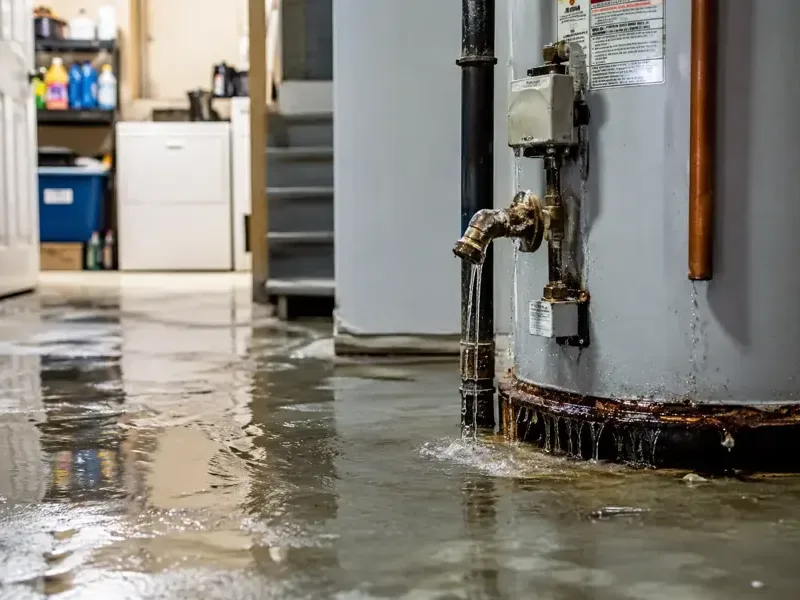
Los Angeles tap water is hard, and hard water leaves scale behind in fixtures and tanks. In Winnetka that is one more reason an older tank water heater can fail, and when one does, a full tank of water goes straight onto the floor.
Key takeaways
- Hard water leaves scale inside a tank over the years, and an aging tank is more likely to leak than a new one.
- Warning signs include rust colored hot water, a rumbling or popping tank, moisture at the base and a weeping relief valve.
- At a leak, close the cold water supply valve at the tank and turn off the power or gas, following the label on the unit.
- On a slab floor the water spreads in a thin sheet into closets, hallways and neighboring rooms.
- A leaking tank is replaced, not patched, and California requires water heaters to be braced against earthquakes.
How hard water wears on a tank water heater
A tank water heater is a steel vessel lined to keep water away from the metal. Hard water deposits scale at the bottom of the tank, and that layer changes how the heater behaves.
Sediment can trap heat against the steel, make the burner or element work harder and leave pockets where corrosion can start. When the lining wears through, the leak begins as a weep and can become a stream.
This is a slow process, which is why the failure often looks sudden to the household. The tank held for years and then did not.
Age matters too. A tank that has run for many years has been through a great many heating cycles, and the serial number on the rating label lets a plumber read when it was built.
Warning signs that a tank is close to failing
Most tanks give a few hints before they leak. Catching them early can mean a planned replacement instead of a flooded room.
- Rumbling, popping or knocking from the tank during heating, which often points to sediment.
- Rust colored hot water, or a metallic smell at the hot tap.
- Moisture, rust streaks or a ring of crust at the base of the tank.
- A relief valve that weeps or drips.
- A puddle or damp patch on the floor, or a stain on the wall behind the heater.
- An older tank that has never been replaced.
Where the water goes: garage, closet and laundry
The place a tank sits decides how far the water travels. Many postwar ranch homes here sit on a concrete slab, so water has no easy way to drain down.
Garage and utility areas
A tank in a garage spreads water across the floor and toward the door into the house. Stored boxes, shelves and the base of the door soak up what they touch.
Closets and hallways
A tank in a closet or laundry room sends water into wall bases and under baseboards. On a slab floor it follows the lowest path into a hallway, a bathroom or a bedroom, and wet flooring there often goes unnoticed for a while.
First steps when the tank leaks
The aim is to stop the supply and keep the leak from spreading while protecting everyone in the house.
A drain pan under the tank can catch a slow drip, but it cannot hold a full tank. When the shell fails, the pan fills quickly and the water spreads anyway.
- Close the cold water supply valve on the pipe feeding the tank.
- Turn off the power at the breaker or the gas control, following the label on the heater.
- Keep children and pets out of the area, and avoid touching electrical outlets near the water.
- Move belongings and rugs off the wet floor.
- Photograph the tank, the puddle and the damage with the date visible.
- Call a plumber for the replacement and a restoration team for the water.
What cleanup and drying involve
Water from a failed tank is clean water at first, but it does not stay that way if it sits. A garage or closet that stays damp can turn unsanitary and invite mold growth in 24 to 48 hours.
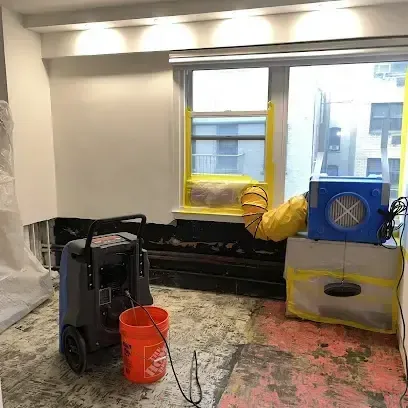
The water extraction crew pulls the standing water first. The drying team then measures floors, baseboards and the lower part of walls with a moisture meter and an infrared camera.
Water that runs into a hallway or bedroom is where drying takes longest, because flooring, pad and the bottom of the wall all hold water. Equipment placement follows the readings, so the crew moves it as the dry area grows.
- Standing water is extracted from the floor and low areas.
- Wet baseboards, pad and soaked drywall bases are removed when they cannot dry in place.
- Fans and dehumidifiers run through the area until readings match dry reference points.
- Wood floors that have started to cup are monitored and dried with care, and hardwood floor drying covers that stage.
Replacement, bracing and questions for the plumber
A tank that leaks through its shell cannot be patched, so the plan is replacement. The cleanup and the replacement are best scheduled together, so the new heater is not set on a wet floor.
For a tank in a closet, the plumber and the drying team often need the heater out of the way to reach the wall behind it. Planning that order avoids a second round of drying.
California law requires water heaters to be braced, anchored or strapped against earthquakes. That is a statewide rule, and it matters here because shaking can tip an unbraced tank and tear its connections.
Water from a heater is one of several appliance leak water damage cases the drying team handles.
- Ask the plumber to install the new heater with bracing or strapping.
- Ask whether a drain pan and drain are part of the installation.
- Ask about a shutoff valve that is easy to reach and clearly labeled.
- Keep the old tank's age and the date of the failure in a note for later.
Questions
How does hard water shorten a water heater's life?
Hard water leaves scale at the bottom of the tank. That sediment traps heat against the steel and can leave spots where corrosion starts, so an older tank is more likely to leak.
Can a leaking tank be repaired?
A leak through the shell of a tank cannot be patched. The usual fix is replacement, and the cleanup is scheduled alongside it.
What should be shut off first when a water heater leaks?
Close the cold water supply valve to the tank, then turn off the power at the breaker or the gas control, following the label on the unit.
Why does a leak in a closet reach other rooms?
On a slab floor the water has no way to drain down, so it follows the lowest path under baseboards into hallways and neighboring rooms.
Does California require water heaters to be braced?
Yes. California law requires water heaters to be braced, anchored or strapped against earthquakes. It is a statewide rule, not a local permit.
Does hard water affect other parts of the plumbing too?
Hard Los Angeles tap water leaves scale in fixtures and tanks. A plumber replacing a heater can also check nearby fixtures and shutoff valves for buildup.