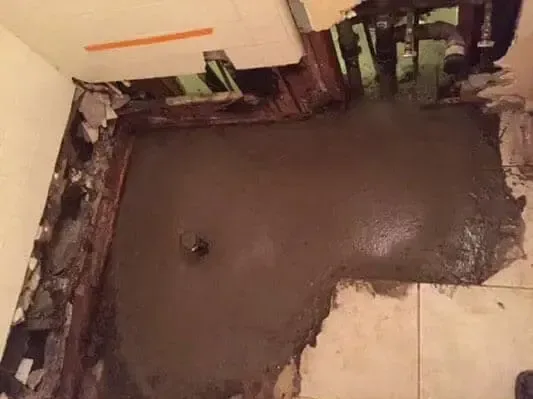
Many postwar ranch homes in Winnetka sit on a concrete slab, with copper supply pipes running beneath the floor. When one of those pipes leaks, the water has no easy way out, so the first clue is often a sound, a warm spot or a jump in the water bill instead of a puddle.
Key takeaways
- A slab leak is a leak in a supply pipe beneath the concrete floor, and many postwar ranch homes here were built on slabs.
- Early signs include a water meter that keeps moving with every fixture off, a warm patch on the floor, the sound of running water in a quiet house and damp baseboards.
- Closing the main shutoff valve at the house is the first move, followed by a second look at the meter to see whether the movement stops.
- Water under a slab spreads sideways and works up at edges and joints, so flooring and cabinet bases can be wet far from the leak.
- The drying team maps the moisture, lifts what cannot be saved and dries the rest, while a plumber handles the repair or a new pipe route.
How a slab leak starts in a Winnetka ranch home
Postwar ranch houses were built low and wide, and many sit on a concrete slab poured at ground level. The hot and cold copper supply pipes that serve the kitchen, bathrooms and laundry run beneath that concrete.
Copper is a durable pipe, but it is not permanent. Pinholes and failed joints can open after decades of service, and a pipe under a slab is out of sight the whole time it ages.
Hot water pipe leaks
A hot supply leak often shows up as a warm or hot patch on the floor, a water heater that seems to run constantly, or a hot water bill that climbs without a reason.
Cold water pipe leaks
A cold supply leak is quieter. The clues are a damp edge along a wall, a musty smell near the floor, or a meter that keeps turning when every tap is closed.
Warning signs that water is already under the floor
Slab leaks rarely announce themselves. A homeowner who knows the signs can catch one before the flooring is ruined.
No single sign proves a slab leak, since a worn toilet flapper can also keep a meter moving, but several together are a reason to look closer. The slab leak warning check helps sort the clues.
- The dial on the water meter keeps moving when every fixture and appliance is off.
- A patch of floor feels warm underfoot, often in a hallway or near the kitchen.
- A faint hiss or the sound of running water comes through the floor when the house is silent.
- Baseboards swell, paint bubbles or a thin crack opens along a wall near the floor.
- Flooring lifts, cups or feels soft, and carpet stays damp for no clear reason.
- The water bill rises even though the household uses water the same way.
First steps when a slab leak is suspected
The goal is to stop new water and keep what is already wet from spreading. These steps work in order.
Two jobs run side by side. The plumber finds and fixes the pipe, the restoration team handles the wet materials, and the work goes faster when each knows the other is involved.
- Close the main shutoff valve at the house, then open one faucet to relieve pressure.
- Look at the meter again. If the dial stops, the leak is on the house side of the shutoff.
- Turn off power or gas to the water heater if the hot pipes are involved, following the label on the unit.
- Photograph wet floors, walls and stains with the date visible, and write down when each sign first appeared.
- Lift small rugs, set furniture legs on foil or blocks, and pull belongings away from baseboards.
- Call a plumber for leak detection and a restoration team for the drying.
Where slab leak water travels: floors, walls and cabinets
Water that escapes under pressure from a pipe beneath a slab has to go somewhere. It follows cracks, control joints and the gaps around plumbing penetrations, then rises where the slab meets the walls.
Flooring over the slab
Carpet and pad soak up water from below and stay wet for days. Wood and laminate can cup or buckle as moisture enters from the underside, and tile can look fine on top while the setting bed beneath it stays damp.
When wood flooring has started to rise at the seams, hardwood floor drying is a separate process from simply running fans over it.
Walls, baseboards and cabinets
Drywall wicks water upward from its bottom edge, and cabinet bases and toe kicks trap moisture against the floor. A leak that seems limited to one room can be wet behind two or three walls.
How the drying team handles slab leak damage
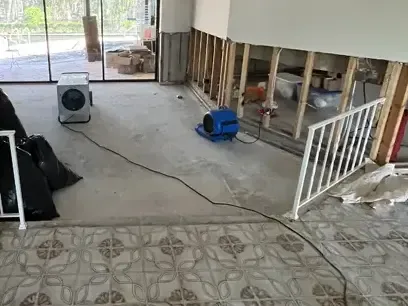
The first visit is mostly measuring. A probe reads moisture in drywall and flooring, and an infrared camera shows cool, wet patches that the eye misses.
Moisture left behind can support mold growth in 24 to 48 hours, which is why drying begins as soon as the water is shut off. The full method is laid out under structural drying.
- Wet carpet pad, soaked baseboards and swollen cabinet toe kicks are removed because they will not dry in place.
- Fans and dehumidifiers run through wet flooring and wall bases until readings match dry reference areas.
- Some flooring can be dried in place with drying mats, and some has to come up so the slab surface can release moisture.
- Readings are logged at each visit, so drying ends when the numbers say it is done and not on a guess.
Fixing the pipe and putting the floor back
A plumber can repair a leaking section by opening the concrete above it, or reroute the supply through walls or the attic so the damaged pipe is retired. The right choice depends on the condition of the pipes and the layout of the house, and it belongs to the plumber and the owner.
Timing matters. If the slab is opened for the repair, the drying team can dry the exposed area before it is closed, and new flooring waits until readings are low and steady.
Large water losses of this kind are handled under slab leak water damage, which covers the whole path from detection to dry floors.
- Share the leak location with the drying team as soon as the plumber finds it.
- Hold off on new flooring until readings stay low and steady across several visits.
- Keep a record of each visit and reading in case it is needed later.
Questions
How can a homeowner tell a slab leak from a dripping fixture?
A meter that moves with every fixture off, a warm patch on the floor or the sound of water in a quiet house points to a leak beneath the floor. A plumber's leak detection confirms the location before anyone breaks concrete.
Does a slab leak always mean the concrete has to be opened?
No. A plumber may repair through the slab, reroute the supply through walls or the attic, or replace sections of pipe. The choice depends on the condition of the pipes and the layout of the house.
How long does a floor take to dry after a slab leak?
The time depends on how long the leak ran, the type of flooring and the amount of water. The drying team follows moisture readings instead of a calendar and stops when the materials match dry reference points.
Do hot and cold slab leaks cause different damage?
Hot leaks add warm, humid air that moves moisture through the house and can warm the floor. Cold leaks are quieter, so they can soak materials for longer before anyone notices.
Should the water stay off until the leak is found?
Yes. Keeping the main valve closed limits how much water escapes under the floor until the pipe is repaired or isolated.