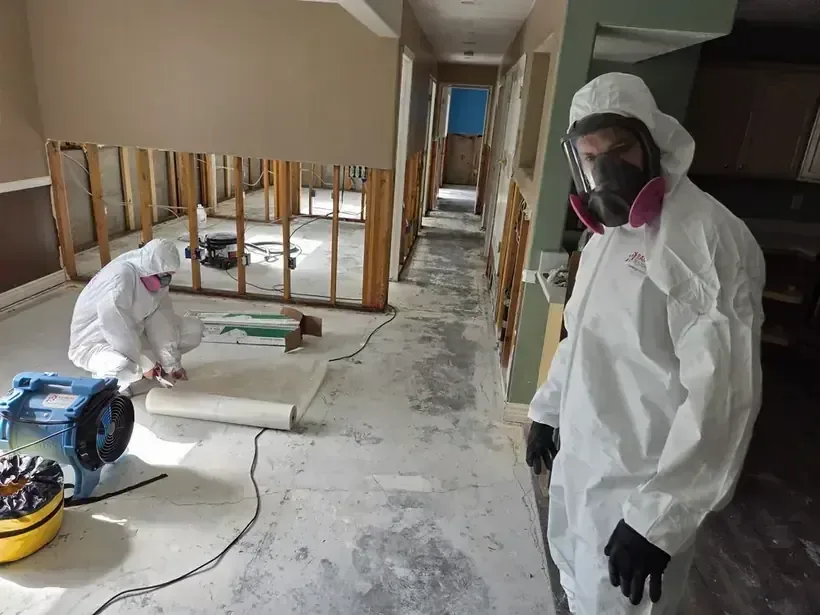
Clay sewer laterals and tree roots are a familiar pair in Winnetka. When roots win the contest, wastewater has only one place to go, and it comes back up through the lowest drain in the house.
Key takeaways
- A sewer lateral is the pipe that carries wastewater from the house toward the main, and clay laterals have joints where roots can enter.
- Slow drains in more than one fixture, gurgling toilets and a sewage smell near a drain are warning signs.
- In a slab ranch home the lowest openings are usually tubs, showers and floor drains, so that is where a backup shows first.
- Stop using water as soon as sewage appears, keep people and pets out, and photograph the damage.
- Sewage is Category 3 water, so soaked porous materials are removed and hard surfaces are cleaned and disinfected.
How roots get into a clay sewer lateral
A sewer lateral runs from the house toward the main sewer in the street. Clay laterals are built from short sections joined end to end, and every joint is a small gap.
Roots follow moisture and warmth, and a joint carrying wastewater offers both. Once a fine root slips inside, it thickens, catches paper and grease, and slows the flow until a blockage forms.
Over time roots can also widen cracks and shift pipe sections, which makes the next blockage easier. That is why a backup that clears once often returns.
Warning signs before the backup
Blockages in a lateral rarely arrive without notice. The pattern of the symptoms points to where the problem sits.
- Slow drains in several fixtures at once, rather than in a single sink.
- Gurgling in a toilet or tub when another fixture drains.
- A sewage smell near a floor drain, cleanout or a patch of yard.
- Water that rises in a shower or tub while the washing machine drains.
- A toilet that flushes weakly even after plunging.
Why the lowest drain in a slab ranch home overflows first
Postwar ranch homes here often sit on a concrete slab, with no floor below the main living level to take the water. That puts every drain opening close to floor level.
Tubs, showers and floor drains
When wastewater cannot leave through the lateral, it rises to the first opening that sits low enough. In most homes that is a tub, a shower or a floor drain in the laundry or garage.
Water across the slab
Backed up water spreads across a slab floor in a thin sheet, slipping under baseboards and into closets and adjoining rooms. A small backup at a tub can end up in a hallway, which makes the contaminated area larger than it first looks.
First steps when sewage backs up
Sewage carries bacteria and viruses, so the first steps protect people and stop adding water to the pipe. Every flush or load of laundry after the first sign of a backup sends more wastewater toward the same blocked spot.
- Stop using toilets, sinks, showers, the dishwasher and the washing machine.
- Keep people and pets out of the wet rooms, and avoid walking through the water in bare feet.
- Photograph the backup and the waterline with the date visible.
- Move dry belongings to higher ground, but leave soaked porous items for the crew to remove.
- Call a plumber to inspect the lateral, ideally with a camera.
- Call a restoration team for extraction and cleanup.
How a plumber finds the blockage
A plumber feeds a small camera into a cleanout or a drain to see inside the pipe. The picture shows roots, cracks, offset joints and the spot where the blockage sits.
The finding also answers a practical question: whether the problem is in the lateral serving the house or farther along toward the main sewer in the street. That is a different problem with a different fix, so it is worth confirming before work begins.
- Roots entering at a joint point to a lateral problem.
- A cracked or sagging section shows where a repair or replacement is needed.
- Grease or wipes packed in the pipe suggest a habit change as well as a clearing.
- A clear lateral with a backup still in progress points toward the main.
What sewage cleanup removes
Sewage is Category 3 water under IICRC S500, the most contaminated class. That label decides what is saved and what is discarded.
Soft materials
Carpet, pad, insulation and the lower portion of soaked drywall are cut out and bagged, because contaminants cannot be rinsed out of them. The water extraction crew pulls standing wastewater before anything else is touched.
Plastic sheeting is often hung to keep the contaminated area apart from clean rooms while the work goes on. Cut materials leave the house in sealed bags, not through the clean parts of the home.
Hard surfaces and framing
After the soft materials are gone, the remaining surfaces are washed, treated with a disinfectant and left to dry before anything new goes in. A concrete slab can be cleaned and disinfected thoroughly, which is one advantage of that type of floor.
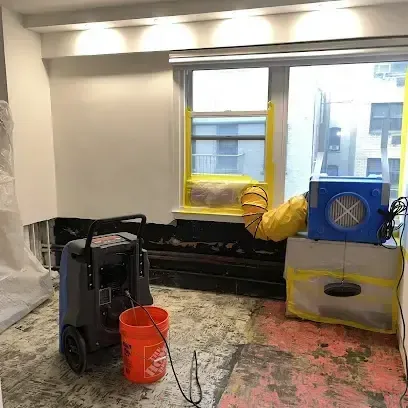
Concrete, tile and framing can usually be cleaned and disinfected. Fans and dehumidifiers then dry the area, since moisture left behind can support mold growth in 24 to 48 hours.
The full path is outlined under sewage backup cleanup, with the drying details under structural drying.
Keeping roots from coming back
Cleaning up the building solves only half the problem. The lateral needs attention too, or the backup can repeat.
- A camera inspection shows where roots entered and whether the pipe has cracked.
- Root cutting clears the blockage, though roots can regrow if the pipe stays open at the joints.
- A damaged section can be repaired or replaced so roots have nowhere to enter.
- Large trees near the path of the lateral deserve a second look before replanting.
- Keep grease, wipes and paper towels out of the drains.
Questions
What is a sewer lateral?
A sewer lateral is the pipe that carries wastewater from a house toward the main sewer in the street. Clay laterals are made of short sections joined together, and the joints are where roots can enter.
Why does sewage come up in the tub or shower first?
Wastewater rises to the lowest opening it can reach. In a slab ranch home that is usually a tub, a shower or a floor drain, because every opening sits close to the floor.
Can a homeowner clean up a small sewage backup alone?
Sewage carries bacteria and viruses, so even small backups call for protective gear and disinfection. Porous materials that soaked it up usually have to be removed, which is best done by a trained crew.
Will the backup happen again after cleanup?
It can if roots or cracks remain in the lateral. A camera inspection and a repair or replacement of the damaged section lower the chance of a repeat.
How is sewage different from other water damage?
Sewage is Category 3 water, the most contaminated class. Soaked porous materials are removed and surfaces are cleaned and disinfected before drying begins.