In Santa Monica, renters make up 73 percent of households and owners 27 percent, according to the city's Assessment of Fair Housing. That mix means a ceiling leak often involves several parties at once: the household below, the unit above and the building manager.
Key takeaways
- Stop the water source first, then protect belongings and photograph the ceiling before anything is moved.
- A leak from above rarely stays in one spot, because water travels along joists and pipes into walls, light fixtures and the units beside and below.
- Tell the unit above and the building manager right away, in writing, so the source can be found and shut off.
- The ceiling is measured with a moisture meter, and wet drywall or insulation is cut out so the cavity can dry.
- Most households here rent and the middle of the city is zoned for multifamily buildings, so a shared floor and ceiling is common.
Why leaks from the unit above come up in Santa Monica
Single family zoning covers the northernmost and southernmost parts of the city, while the middle transportation corridor is zoned for multifamily buildings. Most households rent, so a neighbor's bathroom or kitchen is often directly overhead.
Midtown, which covers most of ZIP 90404, saw many early 1940s bungalows replaced in the 1960s by small multi unit apartment buildings. The median structure in the city was built in 1966.
The city also runs a rent control program, with about 27,589 units still covered at the end of 2025. None of that changes the plain job when water drips from a ceiling: stop the source and dry the cavity.
First steps for the household below the leak
Water from above can follow wiring and light fixtures, so the first steps focus on safety.
- Set a bucket or tub under any drip and move furniture, electronics and bedding out of the wet area.
- Switch off lights and ceiling fans on the wet part of the ceiling, and avoid touching fixtures with water around them.
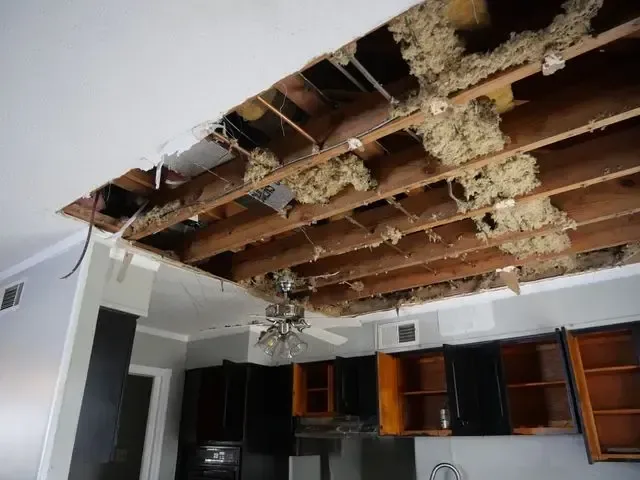
- If the ceiling sags or bulges, keep people out of that room, because trapped water can bring the drywall down.
- Photograph the ceiling, the walls and the floor with the date visible.
- Knock on the unit above and ask them to close the supply valve to any appliance or fixture involved.
- Message the building manager or owner in writing, with the photos attached.
What the unit above can do to stop the water
The source decides how fast the leak can be stopped, and the upstairs household is usually the first to be able to act.
Appliance and supply leaks
Dishwasher hoses, washing machine supply hoses and water heater connections can fail and run until someone notices. Closing the valve behind the appliance usually stops the flow, and appliance leak cleanup covers the aftermath inside the unit.
Tub, sink and drain leaks
A tub overflow, a loose drain connection or a failed seal around a shower pan leaks only while the fixture is in use. Asking the unit above to stop using that fixture is often enough until a plumber can look.
Shared pipes and building systems
Some leaks start in pipes shared between units or in a roof or balcony drain, not in the unit directly overhead. When the upstairs household has nothing running and the ceiling still drips, the manager has to trace the source, and the opened ceiling below stays accessible until that happens.
Roles for renters, owners and building managers
Each party has a different job, and clear messages keep the work moving.
A written timeline also prevents confusion later about which unit the water came from and when it was stopped.
- Renters report the leak quickly, in writing, and keep photos, dates and a list of damaged belongings.
- Owners of the unit above make sure the source is found and stopped, and give access when the ceiling below needs to be opened.
- Building managers coordinate shutoffs, access to the unit above and the schedule for repairs.
- Everyone involved gives the drying team the same account of when the leak started and where it came from.
How the wet ceiling is opened and dried
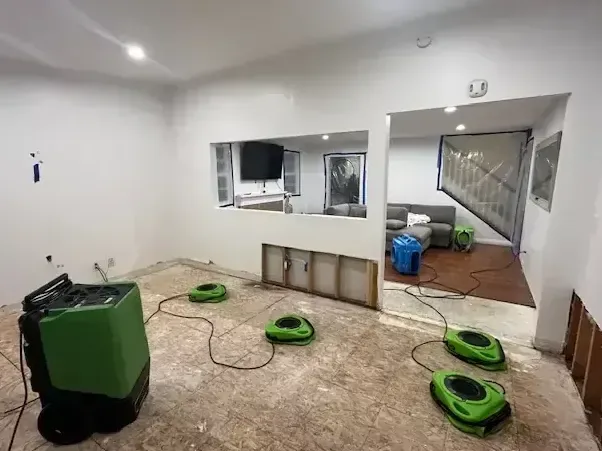
A stained ceiling hides more than it shows. The drying team starts with a moisture meter and an infrared camera to find where the water traveled.
Records help later. The drying team logs readings at each visit, and those numbers show when the ceiling went from wet to dry.
A household that wants to know whether the work is finished can ask to see them.
Ceiling work of this kind is outlined under ceiling leak water damage, and the broader drying approach appears under structural drying.
- Bulging or stained drywall is cut open so trapped water can drain and the cavity can breathe.
- Wet insulation is removed because it holds water against the ceiling surface.
- Neighboring ceilings and the walls below are checked, since water often follows joists sideways.
- Fans and dehumidifiers run until readings match dry reference areas.
Clean water, dirty water and what changes
Where the water came from changes the cleanup. A supply pipe or appliance supply leak starts as clean water, and a drain or toilet overflow does not.
Clean water that sits for a day or more can still turn unsanitary, and moisture left in ceilings can support mold growth in 24 to 48 hours. Water from a drain is handled as contaminated from the start, and more materials are removed.
- Clean supply water: wet drywall and insulation are dried or replaced depending on how long they stayed wet.
- Drain or overflow water: porous materials are removed and surfaces are cleaned before drying starts.
After the drying: records, repairs and next steps
Ceiling repairs wait until the readings are dry and steady. Painting over a damp ceiling traps moisture and invites stains to return.
The household below should keep the photos, the timeline and the drying records together, and share them with the manager or owner as repairs are scheduled. The ceiling leak water damage process outlines the sequence from the first leak to the final repair.
Questions
What should a renter do first when water drips from the ceiling?
Protect people and belongings, stay clear of wet light fixtures, photograph the damage and tell the unit above and the building manager right away, in writing.
Can the unit above shut off the water that is leaking?
Often yes. Closing the valve behind an appliance or asking the household to stop using a fixture can stop the leak until a plumber looks at it.
Why does the ceiling need to be cut open?
Water trapped above drywall and insulation does not dry on its own. Opening the ceiling lets the water drain and gives the drying team access to wet framing and insulation.
Does the leak affect neighboring units too?
It can. Water follows joists, pipes and wall cavities, so ceilings and walls in nearby rooms and units may need to be checked with a moisture meter.
How does clean water differ from drain water in a ceiling leak?
Clean supply water allows more materials to be dried in place, while drain or overflow water is treated as contaminated and more porous materials are removed.