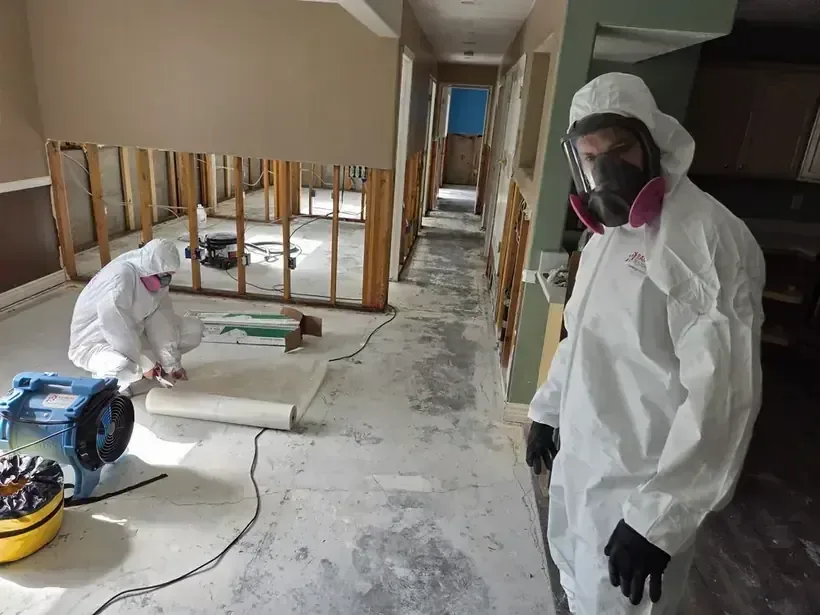
Homes and businesses in Malibu use onsite wastewater treatment systems, commonly called septic systems, and the city requires a permit for each one. When sewage backs up into the building, the problem is not only a cleanup. Under the city's code it is also a sign that the system has failed.
Key takeaways
- Under the city's code, a septic system is in a state of failure when sewage backs up into the building it serves, among other conditions.
- Stop using water in the house at the first sign of a backup, because every flush or load of laundry adds to the problem.
- Sewage is treated as the most contaminated class of water, so soaked porous materials are usually removed.
- The city issues operating permits when a system is repaired, replaced or fails, so the repair and the permit have to be planned together.
- The Civic Center area has a city treatment plant, so the type of system depends on where a property sits.
Why a Malibu backup differs from a city sewer backup
Homes and businesses in Malibu use septic systems, so each property treats its own wastewater on site, with a tank and a drain field, and the city permits every system.
That changes the first questions. A sewer backup points to a blocked pipe between the house and a public main.
A septic backup points to a tank, a drain field or the pipes between them, and the fix lives on the property.
Once sewage is inside the building, local water damage restoration deals with the structure while a septic professional deals with the system.
What the city code says about a failing system
The city ties several milestones in a septic system's life to operating permits. Knowing them helps owners plan the repair around the paperwork.
A homeowner with questions about a specific permit should ask the city directly, since the details depend on the property and the work.
- Operating permits last 5 years for conventional residential systems, 3 years for advanced residential systems and 2 years for commercial and multi family systems.
- The city issues an operating permit before a purchase or change of ownership, when a system is repaired, modified, replaced or upgraded, when a new system is built, and when a system is failing.
- A septic system is in a state of failure when sewage backs up into the building it serves, among other conditions.
- A new septic system needs a coastal development permit from the Planning Department.
First steps when sewage reaches the house
Sewage carries bacteria and viruses, so the first steps keep people safe and stop adding water to the system.
- Stop using toilets, sinks, showers, the dishwasher and the washing machine.
- Keep people and pets out of the affected rooms, and avoid walking through the water in bare feet.
- Photograph the backup, the waterline and any damaged belongings with the date visible.
- Move dry items to higher ground, but leave soaked porous materials in place for the crew to remove.
- Call a septic professional to inspect the tank and drain field.
- Call a restoration team for extraction and cleanup of the building.
Common causes a septic professional checks
The restoration team does not diagnose or repair the septic system. It handles the wet building, while the septic professional looks for the reason sewage came back up.
- A tank that is full and overdue for pumping.
- A drain field that has stopped absorbing water.
- A blocked pipe between the house and the tank.
- A failed pump or alarm on systems that use one.
- Roots or heavy loads of grease, wipes or other items that were never meant for a septic tank.
What sewage cleanup removes from the building
Sewage is classed as Category 3 water under IICRC S500, the most contaminated level. That classification drives what is saved and what is removed.
Contaminated water and soaked materials
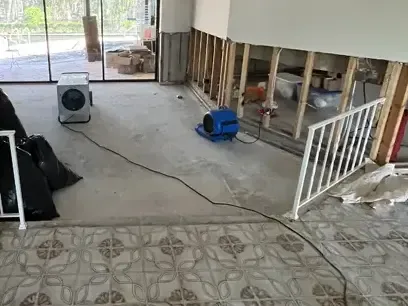
The water extraction crew pulls standing sewage first. Carpet, pad, insulation and soft drywall that soaked it up are usually cut out and bagged, because they cannot be made safe.
Hard surfaces and structure
Tile, sealed concrete and framing can usually be cleaned and disinfected. After cleaning, the area is dried with fans and dehumidifiers, because moisture left behind can support mold growth in 24 to 48 hours.
The full process is described under sewage backup cleanup.
The Civic Center area and the city treatment plant
The City of Malibu runs the Civic Center Water Treatment Facility, a centralized plant that treats wastewater from properties in the Civic Center area. It was built in response to Regional Water Quality Control Board rules that prohibit septic discharges in that area and ban new systems there.
The plant opened in 2018, and phase one included the plant plus collection and distribution pipes to nearby parcels. A property in the Civic Center area may therefore be served by the city plant, while the city's code and permits cover the septic systems used by homes and businesses.
Which applies to a given building is a question for the city.
Planning repairs, permits and drying together
The order of work matters. The source has to be stopped before the cleanup is final, or the building will be flooded again.
Sewage losses of any kind follow the steps in sewage backup cleanup.
A sensible sequence keeps the permit, the system repair and the drying on one schedule.
Owners who plan for the whole chain avoid paying for the same cleanup twice.
- Stop the source: no water use until the system is inspected.
- Clean and dry the building so the structure does not stay wet while the system is repaired.
- Ask the city about the operating permit tied to the repair, replacement or upgrade.
- Rebuild only after readings are dry and steady.
- Keep photos, drying records and permit papers together.
Questions
When does the city treat a septic system as failing?
Under the city's code, a septic system is in a state of failure when sewage backs up into the building it serves, among other conditions.
Does a repair to a septic system need a permit?
The city issues an operating permit when a system is repaired, modified, replaced or upgraded, and a new system needs a coastal development permit from the Planning Department. The city can confirm what applies to a given property.
How long do septic operating permits last?
City operating permits last 5 years for conventional residential systems, 3 years for advanced residential systems and 2 years for commercial and multi family systems.
Why is sewage cleanup different from other water damage?
Sewage is Category 3 water, the most contaminated level, so porous materials that soaked it up are usually removed and hard surfaces are cleaned and disinfected.
Does every property here use a septic system?
No. The city runs the Civic Center Water Treatment Facility for properties in the Civic Center area, so a property there may be on the city system. The city can confirm which applies.